

3.15. Equivalent Loops#
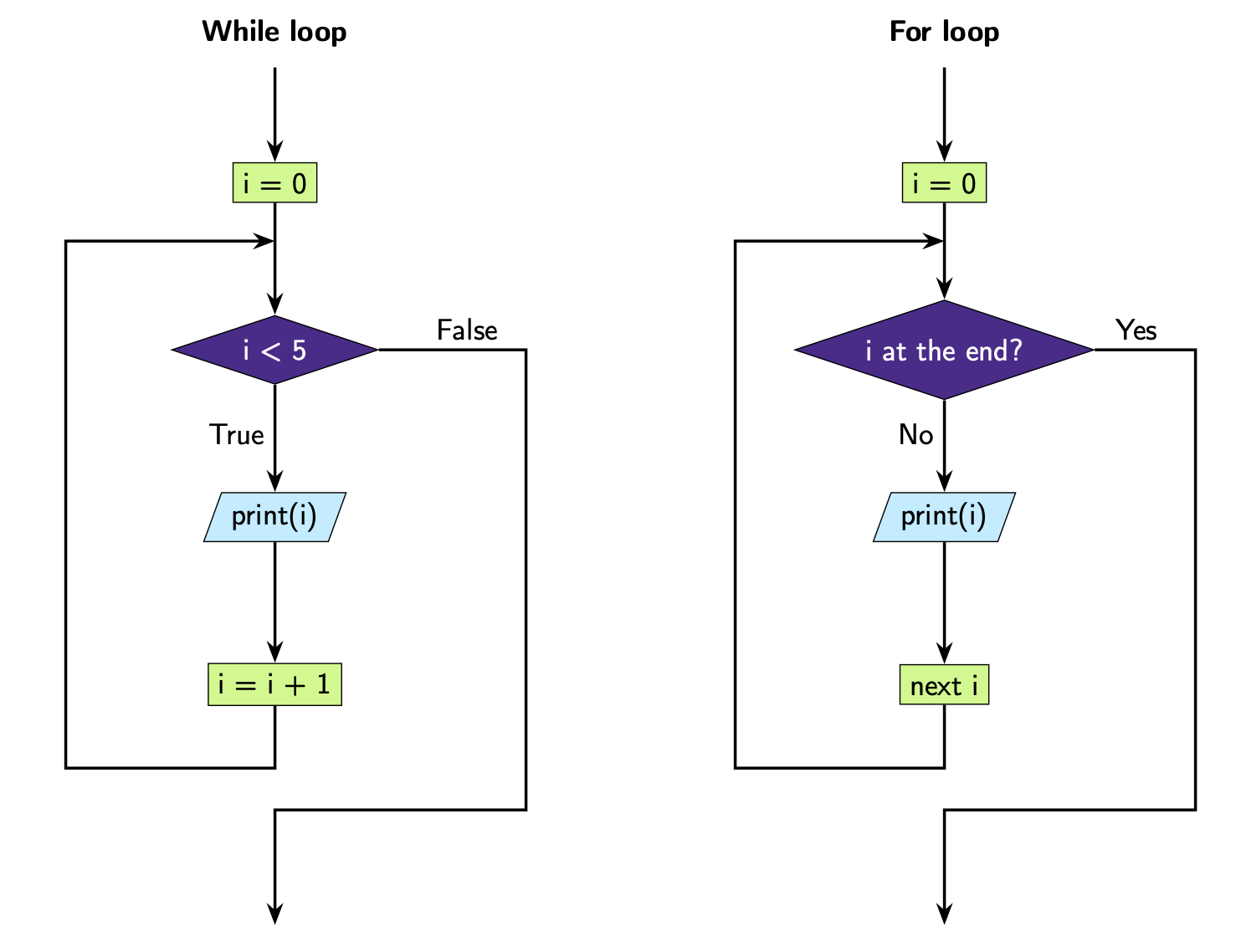
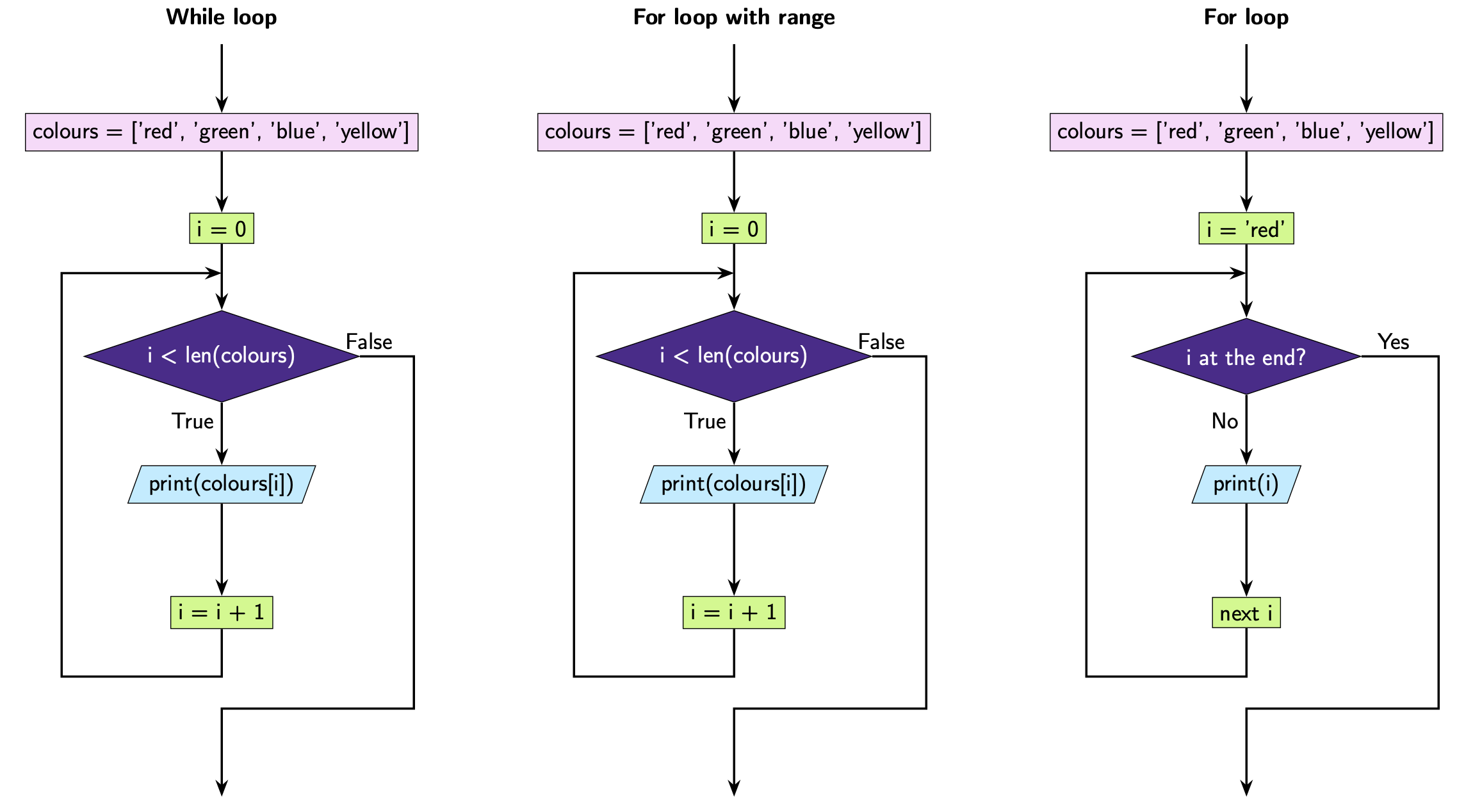
When programming, you’ll find that there are often multiple ways to write your program and have it do the same thing! Have a look at the examples below. You will find that in each example, the programs do the exact same thing.
Example 1: Count 0 to 4
i = 0
while i < 5:
    print(i)
    i = i + 1
0
1
2
3
4
for i in range(5):
    print(i)
0
1
2
3
4
Example 2: Print each colour
colours = ['red', 'green', 'blue', 'yellow']
i = 0
while i < len(colours):
    print(colours[i])
    i = i + 1
red
green
blue
yellow
colours = ['red', 'green', 'blue', 'yellow']
for i in range(len(colours)):
    print(colours[i])
red
green
blue
yellow
colours = ['red', 'green', 'blue', 'yellow']
for i in colours:
    print(i)
red
green
blue
yellow
When you write a loop you will have to choose whether you use a for loop or
a while loop. Often, it won’t matter which one you choose as both will
work. But in general, you would use:
a
whileloop if you don’t know how many times to repeat your code - instead, you will terminate your loop once a certain condition is meta
forloop if you know how many times you want to repeat your code
Question 1
Which of the following
whileloops produces the same output as theforloop shown below?for i in range(5, 10): print(i)
Solution
B.
This
forloop counts from 5 up to but not including 10. To construct an equivalentwhileloop, we wantito start at 5 and then increase by 1 at each iteration until it also goes up to but does not include 10. Of the options provided the second one is the only one whereistarts at 5.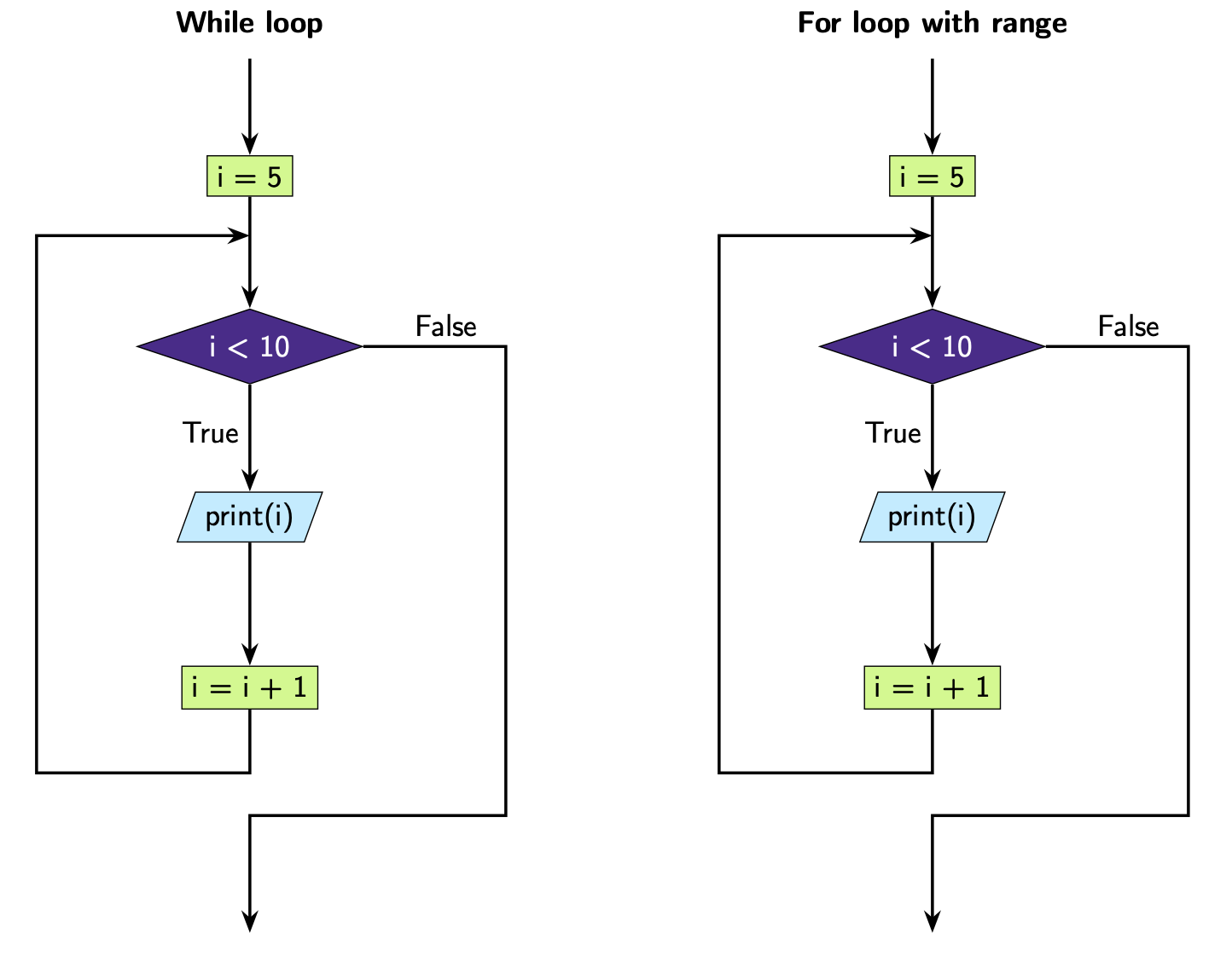
Question 2
Will the following two programs produce the same output?
Program 1
words = ['rain', 'one', 'light', 'owl', 'ranch']
for i in range(len(words)):
    print('b{}'.format(words[i]))
Program 2
words = ['rain', 'one', 'light', 'owl', 'ranch']
for i in words:
    print('b' + i)
Solution
Solution is locked
Question 3
Construct a
forloop that is equivalent to the followingwhileloop.fries = ['curly', 'shoestring', 'waffle', 'crinkle', 'wedge'] i = -1 while i > -len(fries): print(fries[i]) i = i - 1Solution
Solution is locked